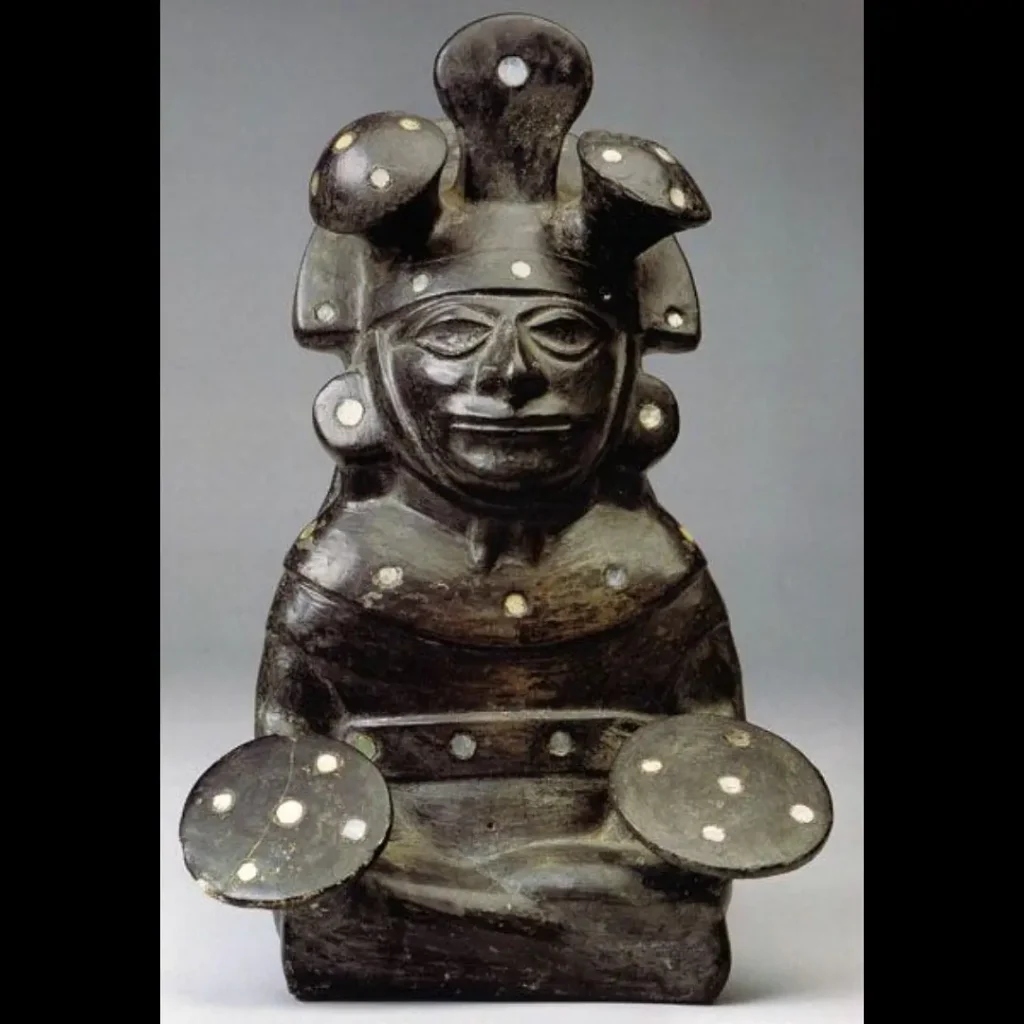
Magic Mushrooms
Psilocibine
Across cultures and continents, psychedelic mushrooms have been revered as teachers, messengers, and gateways to expanded awareness. Long before modern science began studying their effects on the brain, mushrooms were woven into ritual, healing, and spiritual initiation practices, guiding humans into direct communion with nature, cosmos, and consciousness itself.
Rather than functioning as mere substances, psychedelic mushrooms have historically been understood as relational intelligences — intermediaries between the human mind and deeper layers of reality.
A Global, Ancient Lineage of Knowledge
Archaeological, ethnographic, and iconographic evidence suggests that mushrooms played a role in sacred traditions across:
* Mesoamerica
* Northern South America
* Africa
* Asia
* Europe
In these cultures, mushrooms were not used casually. They were accessed within ceremonial containers, often involving fasting, prayer, sound, darkness, and guidance from experienced elders. The intention was not escape, but revelation — insight into the structure of reality, the origins of suffering, and the responsibilities of being human.
These traditions recognized that mushrooms open non-ordinary states of consciousness that demand respect, preparation, and integration.
Consciousness Expansion and the Nature of Reality
Modern neuroscience has begun to validate what ancient cultures already knew: psychedelic mushrooms can temporarily alter the brain’s default patterns, allowing for:
* Increased neural connectivity
* Reduced rigid self-referential thinking
* Enhanced emotional access
* Heightened symbolic and archetypal perception
Subjectively, these states are often described as:
* Encounters with living intelligence
* Dissolution of ego boundaries
* Direct communion with nature
* Visions of geometric, cosmic, or mythological realms
* A felt sense of unity and meaning
From a scientific perspective, these experiences reflect changes in how the brain processes information. From a mystical perspective, they are often interpreted as contact with deeper layers of consciousness that exist beyond ordinary perception.
Healing, Trauma, and Inner Reorganization
Interest in psychedelic mushrooms has surged due to emerging research on their potential role in addressing:
* Depression
* Anxiety
* Trauma
* Existential distress
* Disconnection from meaning
Rather than suppressing symptoms, these states may allow individuals to revisit emotional material with greater openness and reduced fear, creating conditions for insight and release.
Ancient traditions understood healing not as fixing something broken, but as restoring balance between mind, body, spirit, and environment. In this sense, mushrooms were used to realign the individual with:
* Their emotional truth
* Their life path
* Their relationship to the natural world
However, both ancient wisdom and modern research emphasize the same truth: the experience alone is not the medicine. Healing depends on preparation, safety, guidance, and long-term integration.
Communication Beyond the Human Mind
One of the most striking aspects of mushroom experiences — reported consistently across cultures and eras — is the sense of communication with non-human or transpersonal intelligence.
People often describe contact with:
* Nature spirits or planetary intelligence
* Ancestral presences
* Archetypal teachers
* Cosmic or higher-dimensional awareness
Whether interpreted psychologically, symbolically, or metaphysically, these encounters frequently deliver guidance, ethical insight, and a reorientation toward service and responsibility.
Importantly, mature traditions caution against literalism. The value of these encounters lies not in belief, but in how the insight is embodied in daily life.
Mushrooms and Leadership Consciousness
Historically, altered states induced by sacred plants and fungi were often reserved for:
* Healers
* Visionaries
* Initiates
* Community leaders
The purpose was not personal power, but clarity of perception — the ability to see beyond ego, fear, and conditioning in order to guide others wisely.
In this context, psychedelic mushrooms functioned as tools for:
* Ethical insight
* Long-term decision-making
* Remembering one’s role within the larger web of life
True leadership, in these traditions, emerged not from dominance, but from humility, listening, and alignment with natural law.
Sound, Ritual, and the Ceremonial Container
Ancient cultures rarely worked with mushrooms in isolation. They were embedded within multi-sensory ritual technologies, including:
* Chanting and vocal toning
* Drumming and rhythmic sound
* Sacred architecture
* Darkness or candlelight
* Symbolic movement and gesture
Sound in particular plays a crucial role in guiding altered states, shaping emotional flow and visionary imagery. Modern research into brainwave entrainment and rhythm supports this ancient understanding.
The container matters as much as the catalyst.